
The countdown to the 2026 FIFA World Cup has sparked excitement across the globe. Packed stadiums, nonstop travel, and millions of fans moving between cities will turn North America into the center of international sports for weeks. Yet while teams prepare for competition on the field, public health officials are preparing for an entirely different challenge behind the scenes.
This year’s World Cup will be the biggest in tournament history. Matches will take place across 16 cities in the United States, Canada, and Mexico. The event will also feature 48 national teams for the first time. Health agencies are increasing safety measures as experts monitor infectious diseases, heat-related illness, food safety issues, and mosquito-borne viruses.
At the same time, an Ebola outbreak in Congo and Uganda has raised questions about international travel and disease monitoring during one of the world’s largest sporting events. Even so, infectious disease specialists say Ebola is not the biggest threat linked to the tournament.
Health departments across host cities are far more focused on highly contagious illnesses such as measles, Covid-19, and influenza. Officials are also expanding surveillance systems, airport screenings, wastewater testing, and emergency response plans to prepare for the massive influx of international visitors.
Why Ebola Is Not the Main Concern
The current Ebola outbreak in parts of Africa has gained global attention after the World Health Organization labeled it a “public health emergency of international concern.” More than 260 confirmed cases have been identified in Congo and Uganda, while officials continue investigating over 1,100 possible infections.
The strain involved in the outbreak, known as the Bundibugyo virus, has no approved vaccine or treatment and can be fatal. Despite those concerns, experts say the chances of widespread Ebola transmission during the World Cup remain extremely low.
Dr. Shruti Gohil, associate medical director for epidemiology and infection prevention at University of California, Irvine Health, explained why the risk remains limited.
“Ebola and hantavirus, I worry about a lot less. The overall likelihood of risk is not nonzero, but it's low, very low, because it is not easy to transmit person to person.”
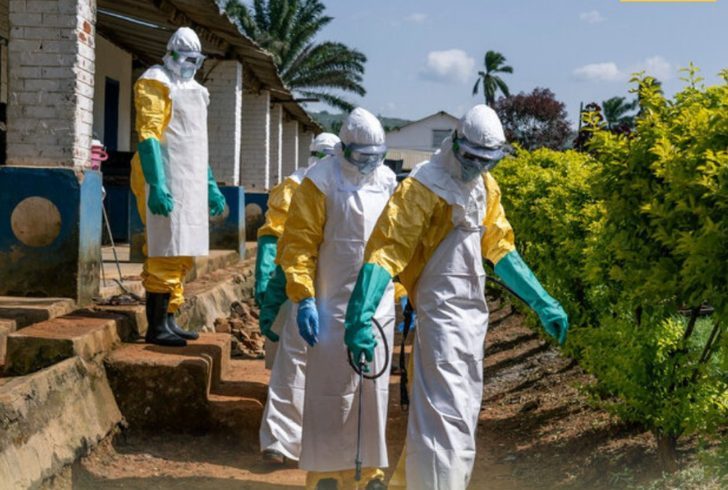
Instagram | timesg.as | Ebola declared a global emergency as cases surge in Congo and Uganda.
Unlike airborne viruses, Ebola spreads through direct contact with bodily fluids or blood from someone already showing symptoms. Dr. Amesh Adalja, adjunct assistant professor at the Johns Hopkins Bloomberg School of Public Health, noted that infected individuals are usually too sick to attend public events.
“It's not a respiratory virus; it's not something that thrives in crowds that don't have exposure to blood and body fluids, so I don't think that it poses an objective threat to the World Cup.”
As of Wednesday, there were no Ebola cases reported in the United States.
Airport Screenings and Monitoring Plans
Even with the lower risk, U.S. health agencies are not taking chances. The Centers for Disease Control and Prevention has introduced enhanced entry measures for travelers arriving from outbreak-linked countries.
Travelers who visited Congo, Uganda, or South Sudan within the previous 21 days must enter the United States through designated airports in Atlanta, Houston, New York, or the Washington area. During screenings, CDC personnel review travel histories, monitor symptoms, check temperatures, and collect contact information for follow-up monitoring.
Health departments continue tracking travelers for the full 21-day Ebola incubation period after arrival.
Dr. Marvia Jones, director of the health department in Kansas City, said local officials receive notifications when travelers from affected regions arrive in their areas. This allows health agencies to quickly monitor any signs of illness.
Dallas County has also expanded emergency preparations. Dr. Phil Huang, director of Dallas County Health and Human Services, said officials coordinated with hospitals and emergency responders to create transport and isolation plans if a suspected Ebola case appears during the tournament.
The county also held educational sessions for healthcare workers based on lessons learned from Dallas’ 2014 Ebola case. The training covered symptom recognition, travel history screening, patient isolation procedures, contact tracing, and proper use of personal protective equipment.
Huang acknowledged that Ebola remains a sensitive issue in Dallas because of the city’s past experience.
“It is definitely top of mind as a heavy thing with our history.”
FIFA also confirmed it is monitoring the outbreak and working closely with government agencies in all three host countries to maintain tournament safety.
Measles Has Become the Biggest Worry
While Ebola draws headlines, health experts repeatedly point to measles as the disease causing the greatest concern ahead of the tournament.
Measles spreads through the air and is considered one of the most contagious viruses in the world. Public health officials worry that international travel during the World Cup could quickly carry infections across multiple cities and countries.
James Garrow, communications director for Philadelphia’s Department of Public Health, described measles as the city’s primary infectious disease concern connected to the tournament.
“We're seeing outbreaks throughout the U.S. and overseas, and when you have a disease that's as infectious as this, people just have to be in the same plane for an hour or two and all of a sudden you have an outbreak that's transferred to somewhere else.”
Philadelphia officials have increased coordination with hospitals and healthcare providers to improve rapid detection and information sharing before matches begin.
The concern is tied to rising measles cases across the United States. In 2025, the country recorded more than 2,100 confirmed measles cases — the highest annual total since 1991. Cases appeared in 45 jurisdictions, and the CDC documented 48 outbreaks during the year, compared with just 16 outbreaks the year before.
The United States eliminated measles in 2000, but declining vaccination rates and growing misinformation have fueled the virus’ return. CDC data shows roughly 93% of confirmed cases last year involved unvaccinated individuals or people with unknown vaccination status.
Health officials fear the World Cup’s nonstop movement of fans could create ideal conditions for rapid spread.
Covid-19 and Flu Still Matter
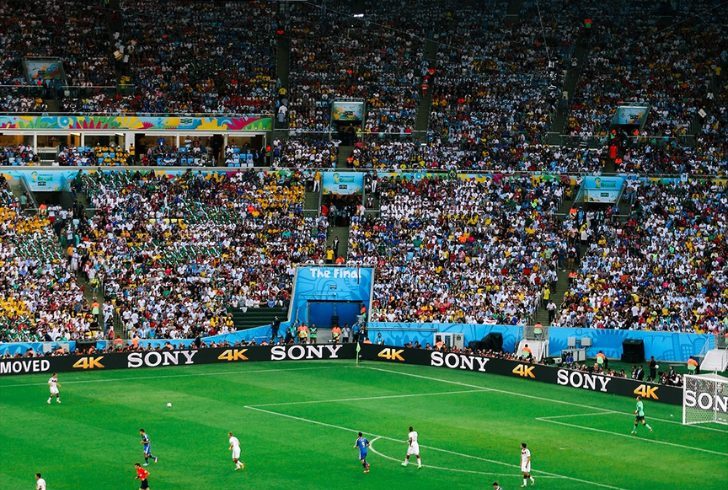
Instagram | fifaworldcup | Respiratory viruses spread easily in crowded stadiums, remaining a top public health concern.
Respiratory viruses remain another major focus for public health agencies. Experts say airborne diseases can spread far more easily through airports, public transportation, stadium crowds, restaurants, and indoor gatherings.
Dr. Theresa Tran, director of the Houston Health Department, explained why diseases such as Covid-19 and influenza continue to demand close attention.
“The transmissibility being airborne makes them so much more likely to cause a public health threat than Ebola.”
Houston officials have maintained active epidemiology teams that monitor vaccine-preventable diseases and conduct contact tracing when necessary. Similar response units are operating in other host cities as health agencies prepare for large-scale crowd movement during the tournament.
Officials are also reminding travelers about basic prevention measures such as staying updated on vaccinations, avoiding travel while sick, and practicing proper hygiene in crowded spaces.
Other Health Risks Facing Fans
Public health planning for the World Cup extends beyond infectious diseases. Officials are also preparing for foodborne illnesses, heat-related emergencies, sexually transmitted infections, and mosquito-borne viruses.
Cities hosting matches during summer months could face dangerous heat conditions, especially in southern regions of the United States.
Houston has launched public awareness campaigns focused on heat illness prevention because of the city’s high humidity and temperatures. Health departments also deployed registered sanitarians to inspect food vendors operating during matches and fan events.
Dr. Monika Roy, deputy health officer for Santa Clara County, California, said officials are working with vendors before large events begin. The goal is to ensure proper permits and safe food practices.
Mosquito-borne illnesses have also entered the discussion. Diseases such as dengue, chikungunya, Zika, and West Nile virus remain concerns in certain regions, especially during warmer months.
Dallas County expanded mosquito surveillance programs to monitor those viruses ahead of the tournament.
Public Health Systems Face Pressure
The World Cup arrives during a difficult period for public health agencies in the United States.
Dr. Rebecca Katz of Georgetown University’s Center for Global Health Science and Security said the World Cup adds pressure to public health systems. Reduced staffing and weaker international coordination have made preparations more difficult.
Earlier in 2025, the Trump administration cut nearly 10% of the CDC workforce. The reductions affected epidemiologists and scientific teams involved in emergency response and field operations. The United States also withdrew from the World Health Organization earlier that year. As a result, communication between global health agencies became more challenging.
At the same time, the CDC currently lacks a permanent director and U.S. surgeon general.
Despite those obstacles, federal officials insist preparation efforts remain active. The CDC confirmed it is working with the White House FIFA World Cup 2026 Task Force, local health departments, and partner agencies across host cities.
The agency is also developing a World Cup health data dashboard designed to help state and local agencies track disease trends in real time during the tournament.
Dr. Katz emphasized that many health workers continue operating with fewer resources and smaller teams.
“There have been cuts to public health at all levels and the folks who are in those jobs are working really, really hard.”
New Surveillance Tools Are Expanding
Health officials are leaning heavily on technology and early-warning systems to strengthen outbreak detection before and during the World Cup.
Wastewater surveillance has become one of the most important tools in recent years. The system analyzes sewage samples to detect viruses and bacteria circulating within communities before large outbreaks appear through traditional testing.
Dallas County has expanded wastewater sample collection sites to cover nearly the entire county. Officials are also introducing metagenomic testing, which allows scientists to identify a broad range of bacteria, viruses, and fungi from sewage samples rather than testing for a single pathogen.
Philadelphia recently launched a mobile laboratory that can test samples on-site instead of shipping them to specialized facilities elsewhere. Officials believe the lab will improve response times and increase testing access across more areas.
At the national level, Georgetown University and MedStar Health launched the Health Security Operations Center in May. The center distributes daily infectious disease reports to public health agencies, hospitals, emergency managers, and tournament organizers.
The operation also joins daily coordination calls hosted by the Pan American Health Organization. The agency monitors disease activity across the United States, Mexico, and Canada during the tournament.
Public Health Work Often Stays Invisible
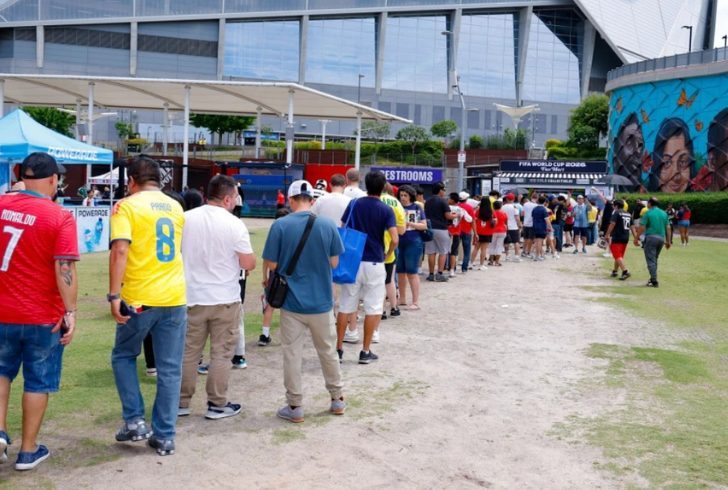
Instagram | laistofficial | Health agencies are boosting surveillance and testing to protect everyone during the event.
For many health officials, success during the World Cup will mean fans never notice the systems operating behind the scenes.
Dr. Theresa Tran described public health as an “invisible shield” that quietly protects communities while allowing major events to continue safely.
“Public health prides itself in being the invisible shield, but I don't want that to get lost in the actual Herculean effort it takes to have an operational invisible shield.”
Dr. Margaret Aldrich, pediatric epidemiologist at NYU Langone, believes the United States is more prepared than ever for large-scale infectious disease monitoring despite recent staffing challenges.
“The departments of health are really continuing to maintain that hard work and ensuring that, as we always say, if we're doing our job, you don't see it.”
The 2026 FIFA World Cup will be more than a major sports event. Public health officials across North America are preparing for health risks linked to heavy travel and packed stadiums.
Although the Ebola outbreak remains under watch, experts say measles, Covid-19, flu, foodborne illnesses, and heat-related conditions are bigger concerns during the tournament. Large crowds and constant travel between host cities could increase the spread of infectious diseases.
To prepare, health agencies have expanded airport screenings, wastewater testing, mosquito surveillance, and emergency monitoring systems. These efforts aim to protect visitors and local communities throughout the event.
Most fans may not notice the planning behind the scenes. Still, public health teams will play an important role in keeping the tournament safe and organized.