
Stress often builds quietly, then suddenly feels overwhelming. Thoughts start looping through worst outcomes, unfinished tasks, and pressure from every direction. Sleep gets lighter, attention drifts, and daily decisions feel heavier than they should.
Mindfulness offers a grounded way to slow that mental rush and bring attention back to what is happening right now.
This practice does not ask for silence in the mind or avoidance of reality. It supports clearer awareness of thoughts and emotions so responses feel steadier and less reactive. With consistent practice, everyday moments begin to feel more balanced, even during uncertainty.
What Mindfulness Really Means
Mindfulness is the practice of paying attention to the present moment with openness and curiosity. It focuses on noticing thoughts, emotions, and physical sensations without labeling them as good or bad.
Amanda McNab, a licensed clinical social worker at Huntsman Mental Health Institute at the University of Utah, explains it this way:
“Instead of fighting your thoughts or pushing feelings away, mindfulness helps you notice what’s happening—without judgment. You learn to work with your experiences, not against them.”
This approach does not ignore problems. It helps create mental space so reactions become more intentional rather than automatic. Over time, that space supports clearer thinking during stressful situations.
Why Mindfulness Matters for Stress

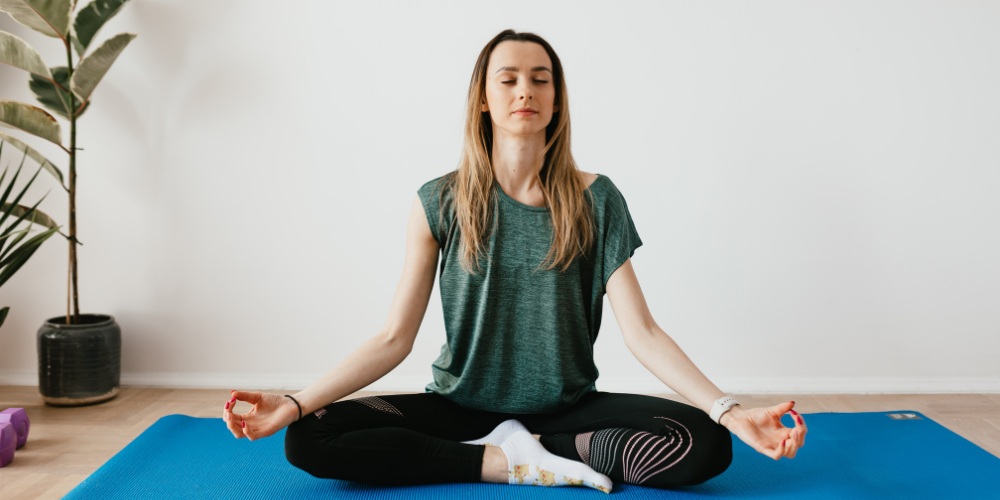
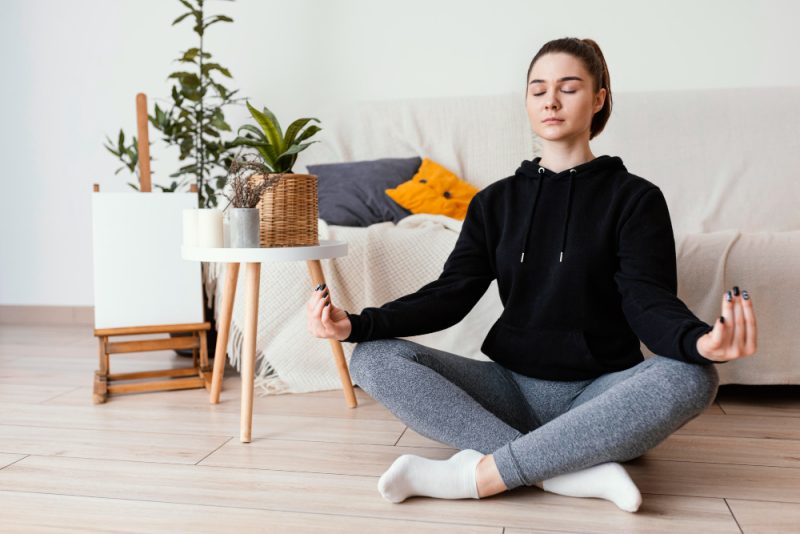
Freepik | Mindfulness breaks the cycle of stressful overthinking by grounding you in the present.
Stress often pushes the mind into repetition—replaying worries or predicting negative outcomes. Mindfulness interrupts that cycle by anchoring attention in the present.
When attention shifts away from constant mental noise, emotional intensity can feel more manageable. Decision-making becomes less rushed, and focus improves during routine tasks.
Research suggests that regular mindfulness practice may support both mental and physical well-being, especially when combined with appropriate medical care.
Key Benefits of Mindfulness Practice
Mindfulness affects several areas of daily functioning. Its impact often builds gradually through consistent practice.
1. Physical well-being support
Stress plays a role in many health concerns. Mindfulness has been linked in studies to lower blood pressure, reduced pain perception, eased symptoms of depression, and support during addiction recovery.
2. Cognitive and emotional balance
Stress often affects attention span, memory, and decision-making. Mindfulness supports mental clarity by improving focus during tasks, strengthening problem-solving ability, and helping maintain emotional control under pressure. It also encourages more thoughtful responses instead of impulsive reactions.
3. Stronger sense of positive awareness
Attention becomes more tuned to small, meaningful moments such as natural light, conversations, or simple daily experiences. This shift supports a steadier emotional outlook during uncertain periods.
Practical Ways to Practice Mindfulness
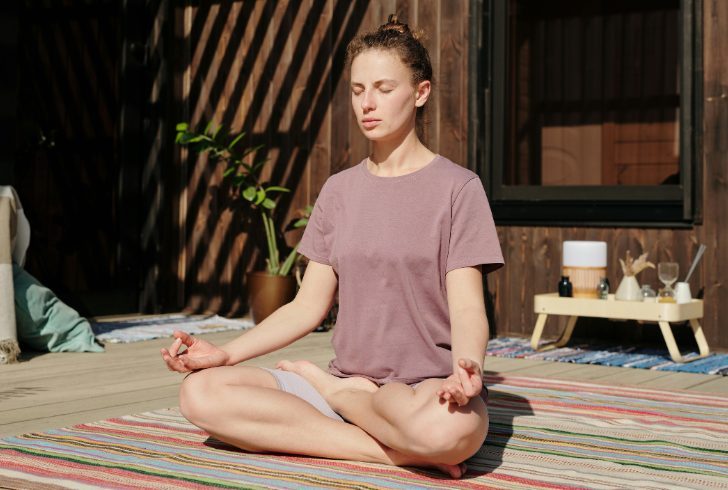
Freepik | Short, daily breath awareness is an easy, effective way to calm your mind and build focus.
Mindfulness does not require long sessions or complex routines. Short and steady practices often fit more naturally into daily life.
1. Breath awareness - Focus attention on each inhale and exhale. When thoughts drift, gently return attention to breathing. This helps calm mental activity and supports steadier focus.
2. Body scan - Bring attention across the body from head to toe. Notice areas of tension or comfort without trying to change them. This builds awareness of physical presence.
3. Everyday mindfulness - Simple routines such as eating, walking, or listening can become mindful moments by paying full attention to sensations and surroundings.
4. S.T.O.P. method - A quick grounding technique used during busy or stressful moments:
S – Stop: Pause current activity
T – Take a breath: Slow, steady breathing
O – Observe: Notice thoughts, emotions, and body signals
P – Proceed: Continue with clearer awareness
Mindfulness offers a practical way to steady attention and reduce the intensity of stress-driven thinking patterns. With regular use, mental space becomes easier to access during pressure, supporting clearer decisions and emotional balance.
Simple techniques such as breath awareness, body scanning, and short pauses throughout the day help build consistency. Over time, this approach supports a calmer internal rhythm while maintaining awareness of daily life as it unfolds.